Grand Canyon River Rafting Trips
Rafting through the Grand Canyon is one of the most immersive ways to experience the Colorado River, but not every trip described as “Grand Canyon rafting” follows the same route or offers the same level of adventure. Options range from multi-day whitewater expeditions through Grand Canyon National Park to a one-day Hualapai rafting trip in the western canyon and smooth-water float trips near Horseshoe Bend.
The classic Grand Canyon river journey begins at Lees Ferry and continues downstream through some of the deepest and most remote parts of the canyon. Commercial trips may use motorized rafts, oar-powered rafts, paddle rafts or dories and generally last from several days to more than two weeks. Travelers camp along the river, hike into side canyons and experience a mixture of calm water and major rapids.
Shorter river experiences are also available, but they should not be confused with a full or partial expedition through the central whitewater corridor. The right trip depends on your available time, physical ability, preferred boat style, tolerance for camping and whether you want whitewater or a gentler sightseeing float.
Which Grand Canyon rafting trip should you choose?
Choose a multi-day commercial expedition for the classic canyon journey, the Hualapai one-day trip for a single-day whitewater experience, or a Horseshoe Bend float trip for calm water and canyon scenery near Page.
| Trip Type | Typical Experience | Best For |
|---|---|---|
| Multi-day commercial expedition | Guided whitewater rafting, camping and side-canyon hikes | Travelers seeking the complete river experience |
| Partial-canyon expedition | Several days on the river, sometimes involving a strenuous hike or specialized transfer | Travelers without time for the full canyon |
| One-day Hualapai whitewater trip | Motorized rafting from the Diamond Creek area through the western canyon | Travelers who want whitewater without a week-long trip |
| Horseshoe Bend smooth-water float | Calm-water sightseeing in Glen Canyon near Page | Families and visitors who prefer little or no whitewater |
| Noncommercial permit trip | Self-organized expedition under a National Park Service river permit | Experienced groups prepared to manage the complete trip |
Compare Grand Canyon Rafting Trips
Multi-Day Whitewater Rafting Through Grand Canyon National Park
The classic Grand Canyon rafting expedition travels downstream from Lees Ferry into Grand Canyon National Park. Commercial outfitters operate professionally guided trips using several types of watercraft and itineraries.
Depending on the trip, passengers may spend several days or more than two weeks on the river. The National Park Service lists commercial trips ranging from approximately three to eighteen days, although the exact length depends on the route, boat type, passenger exchanges and takeout location.
A typical multi-day trip includes:
- Professional river guides
- Rafts or dories and required safety equipment
- Meals, drinking water and camp equipment
- Waterproof storage bags
- Riverside camping
- Whitewater rapids
- Calm-water sections
- Guided hikes into side canyons
- Interpretation of geology, ecology and human history
- Transportation associated with the trip itinerary
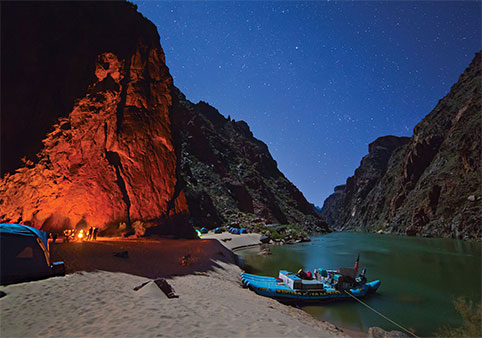
Guests usually sleep on sandy beaches or established river camps beneath the canyon walls. Camps are primitive. There are no hotel rooms, showers, electrical hookups or reliable cellular connections along most of the route.
Although the outfitter handles navigation, meals and major logistics, passengers are commonly expected to participate in camp life. This may include carrying personal bags, forming loading lines, setting up sleep equipment and helping keep camps organized.
Best for:
Travelers who want the fullest Grand Canyon rafting experience and are comfortable camping in a remote environment.
What a Typical River Day Is Like
River days often begin early. Passengers pack their personal sleep equipment and waterproof bags before breakfast, help load the boats and depart camp in the morning.
The day may alternate among:
- Long stretches of calm water
- Whitewater rapids
- Short interpretive stops
- Side-canyon hikes
- Waterfalls and swimming areas
- Historic or archaeological sites
- Lunch beside the river
- Time to relax at camp
Not every itinerary visits the same locations. Campsites, river conditions, weather, group pace and other permitted river parties affect the daily plan. Guides adjust the schedule to current conditions rather than following a rigid sightseeing checklist.
Most river miles are not continuous whitewater. Long calm sections provide time to watch the canyon walls change, listen to guide interpretation and absorb the scale of the landscape. The quiet is then interrupted by the sound of an approaching rapid, which can build long before the waves become visible.
Camping Along the Colorado River
Camping is an essential part of a multi-day river trip. Passengers usually sleep outdoors on cots, pads or ground sheets provided or specified by the outfitter. Tents may be available, but many guests choose to sleep beneath the open sky when conditions permit.
Camp conditions vary. Beaches can be sandy, rocky, hot, windy or exposed to rain. Participants should be comfortable with:
- Sleeping outdoors
- Using portable river toilets
- Limited privacy
- Sand in clothing and equipment
- Changing weather
- Carrying gear across uneven ground
- Living without conventional plumbing or electricity
Commercial outfitters provide detailed packing instructions. Follow the individual company’s list rather than bringing standard luggage, hard-sided suitcases or unnecessary electronics.
Food and Drinking Water
Commercial trips generally include meals, snacks and treated drinking water. Guides transport and prepare the food, and meals can be surprisingly substantial given the remote setting.
Dietary accommodations vary by outfitter. Travelers with allergies, medical restrictions or specialized diets should discuss their needs before booking and provide adequate notice.
Passengers should not assume that every dietary preference can be accommodated in a remote environment where replacement food is unavailable.
Motorized Rafting Trips
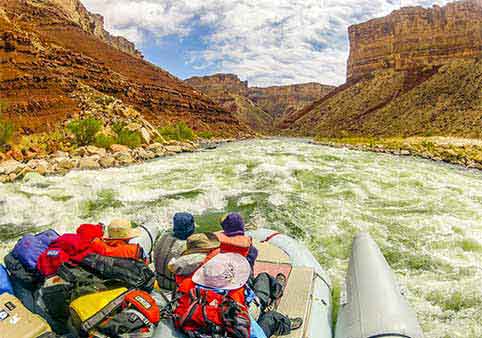
Motorized trips use large inflatable rafts powered by outboard motors. Because these boats can travel more quickly through long stretches of flat water, motor trips generally cover the canyon in fewer days than oar-powered trips.
Motorized rafts also carry more passengers and equipment than most oar boats. Seating is informal, and passengers may be able to choose between wetter positions near the front and comparatively drier positions farther back, subject to guide instructions and boat configuration.
Potential advantages:
- Shorter overall itinerary
- More room for group equipment
- Less time required away from home
- Ability to cover more river miles per day
- A broad range of commercial itineraries
Potential drawbacks:
- Larger passenger group
- Engine noise during some river sections
- Less intimate than a small oar boat
- Longer daily travel distances on faster itineraries
@southwestmedia Have you ever gone whitewater rafting? This is one of the most incredible ways to experience the Grand Canyon. #grandcanyon #grandcanyonrivertrip #grandcanyonnationalpark #whitewaterrafting
Best for:
Travelers who want the multi-day canyon experience but cannot commit to the longer schedule of many oar or dory trips.
Oar-Powered Rafting Trips
On an oar trip, a guide rows the raft while passengers ride with the gear. Oar-powered travel is generally quieter and slower than a motorized trip, allowing more time to hear the river, observe wildlife and experience the changing canyon at a measured pace.
Oar trips often require more days to cover the same section of river. Boat size, passenger capacity and camp arrangements vary among outfitters.
Potential advantages:
- Quieter river experience
- Smaller number of passengers per boat
- More time in the canyon
- Slower pace through calm-water sections
- Closer interaction with the boat guide
Potential drawbacks:
- Longer trip commitment
- More exposure to wind and changing conditions
- Less room for personal equipment
- Potentially more rugged camp experience
All whitewater boating involves risk. Rafts can become stuck, passengers can be thrown into the water and boats can occasionally overturn. Outfitters provide safety briefings and personal flotation devices, but no river trip is risk-free.
Dory Trips
Dories are rigid boats commonly made from wood or composite materials. They respond differently to waves than inflatable rafts, often climbing sharply over wave crests and providing a lively ride.
Dories are rowed by an experienced guide and usually carry fewer passengers than a large motorized raft. Because they are rigid rather than inflatable, they require careful navigation around rocks.
Best for:
Travelers seeking a traditional, small-boat experience and who are comfortable with a longer itinerary and a more active ride.
Paddle-Raft and Hybrid Trips
Paddle rafts require passengers to help propel the boat under the direction of a paddle captain. They provide the most participatory rafting experience but demand more physical effort and coordination than simply riding in an oar or motor raft.
Some commercial trips carry several kinds of boats, allowing guests to rotate among an oar raft, paddle raft or other craft when conditions permit. Other hybrid itineraries use an oar-powered fleet with a motorized support boat carrying camp equipment.
Boat availability and participation rules differ by outfitter. Travelers specifically interested in paddling or riding in a dory should confirm that experience before reserving.
Full-Canyon Trips
A full-canyon trip allows guests to travel through the major geological and whitewater sections without entering or leaving by a strenuous inner-canyon trail. Commercial itineraries may end at Diamond Creek or continue farther downstream, depending on the operator and trip authorization.
A full trip provides more time for the group to settle into river life and avoids losing part of the itinerary to a passenger exchange. It also requires the largest commitment of time and usually costs more than a partial trip.
Potential advantages:
- No required rim-to-river passenger hike
- More complete view of the canyon’s geology
- Both upper- and lower-canyon rapids
- More side-canyon hiking opportunities
- Greater continuity with guides and fellow passengers
Best for:
Travelers who have the time, budget and physical readiness for the most complete guided river experience.
Upper-Canyon and Lower-Canyon Trips
Partial-canyon itineraries allow travelers to experience one portion of a longer expedition. Historically, some commercial trips have exchanged passengers near the central canyon, requiring participants to hike between the South Rim and the Colorado River.
This is not a casual transfer. Rim-to-river routes involve thousands of feet of elevation change, steep terrain, limited shade and potentially extreme heat. Trail availability, water access and commercial passenger-exchange procedures can change because of construction, weather, closures and National Park Service restrictions.
Do not book a hike-in or hike-out river trip without understanding the trail requirement.
A central-canyon passenger exchange may require a strenuous hike carrying personal equipment between the river and the South Rim. Confirm the exact trail, distance, elevation change, water availability and current park conditions directly with the outfitter.
Upper-canyon trips
Upper-canyon itineraries begin near Lees Ferry and travel through Marble Canyon and into the deeper geological layers of the Grand Canyon. They may feature archaeological sites, side-canyon hikes and a vivid progression through the canyon’s rock layers.
Lower-canyon trips
Lower-canyon itineraries generally include many of the canyon’s best-known large rapids and waterfall hikes. Depending on the itinerary, travelers may enter through a strenuous inner-canyon hike or use another authorized passenger-transfer arrangement.
Do not choose solely according to which half is described as more exciting. Trip length, boat style, hiking demands and current access arrangements are often more important than the upper-versus-lower label.
One-Day Hualapai Whitewater Rafting
The principal one-day whitewater rafting experience in the Grand Canyon is operated by Hualapai River Runners. It begins from Peach Springs, Arizona, rather than the South Rim visitor area or Grand Canyon Village.
Guests travel by road to the Diamond Creek area and board motorized rafts for a run through the western portion of the canyon. The itinerary may include rapids, canyon scenery, a waterfall hike and an aircraft transfer, depending on the product currently offered.
This experience occurs on Hualapai lands and operates separately from the commercial multi-day concession trips that begin at Lees Ferry and travel through Grand Canyon National Park.
Important planning details:
- Check-in is in the Peach Springs area
- The river launch is reached by a lengthy road transfer
- The rafting location is not beside the Grand Canyon West Skywalk
- Weather and river conditions may affect operations
- Age, weight, mobility and footwear requirements may apply
- The trip involves a long and active day
Best for:
Travelers who want genuine Grand Canyon whitewater but cannot devote several days to a full expedition.
Horseshoe Bend Smooth-Water Float Trips
Smooth-water float trips near Horseshoe Bend travel through Glen Canyon, upstream of the primary Grand Canyon whitewater corridor. They commonly operate between Lees Ferry and the Colorado River below Glen Canyon Dam, depending on the current itinerary.
These trips feature tall sandstone walls, calm water and views from river level, but they do not include the major rapids associated with a multi-day Grand Canyon expedition.
Best for:
- Families
- Travelers who prefer calm water
- Visitors staying in Page
- Guests with limited time
- Travelers interested in Horseshoe Bend scenery
Important distinction:
A Horseshoe Bend float is a Colorado River canyon experience, but it is not a whitewater expedition through the central Grand Canyon.
Helicopter and Pontoon Combination Tours
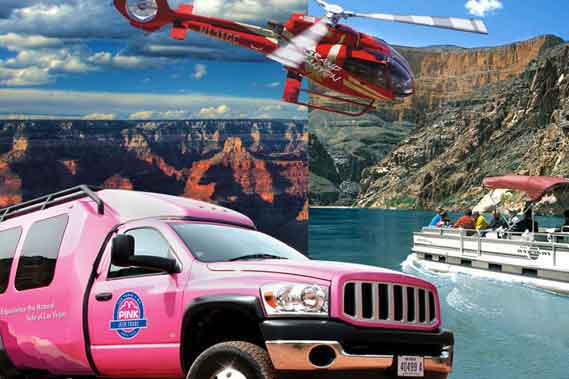
Selected Grand Canyon West products combine a helicopter descent with a short pontoon boat ride on the Colorado River. These are sightseeing experiences rather than whitewater rafting expeditions.
A pontoon ride generally covers a limited stretch of calm water and should not be compared directly with the Hualapai one-day rafting trip or a multi-day Lees Ferry expedition.
Best for:
Grand Canyon West visitors seeking a brief river-level view without camping or running significant rapids.
Grand Canyon River Rafting Day Trips
Compare More Grand Canyon Experiences
- All Grand Canyon Tours
- Grand Canyon Bus, Van and Vehicle Tours
- Grand Canyon Helicopter Tours
- Guided Grand Canyon Hiking Tours
- Grand Canyon Railway Trips
Plan Around Your Rafting Trip
- Grand Canyon Tours from Flagstaff
- Grand Canyon Tours from Las Vegas
- Grand Canyon Tours from Phoenix and Scottsdale
- Hotels Near the South Rim
- Flagstaff Hotels
Commercial or Noncommercial?
Most first-time river travelers should choose a commercial trip. Authorized outfitters provide the guides, boats, food, water treatment, group equipment, safety systems and transportation logistics required for a remote expedition.
Commercial trips are not simply raft rentals. Guides must safely navigate the river, organize camps, prepare meals, interpret the canyon and respond to injuries, weather changes and other emergencies.
Commercial trips are best for:
- First-time Grand Canyon rafters
- Travelers without their own river equipment
- Guests who do not want to organize food and group logistics
- People seeking professional interpretation
- Families and groups wanting a defined itinerary
Noncommercial trips are self-guided expeditions commonly called private trips. A National Park Service permit is required, and launch dates for the main Lees Ferry-to-Diamond Creek route are generally distributed through a weighted lottery.
Noncommercial groups must provide and manage their own:
- Qualified trip leadership
- Boats and rigging
- Safety and rescue equipment
- Food and water systems
- Waste disposal
- Camp equipment
- Transportation
- Emergency planning
- Compliance with river regulations
Winning a permit does not make a person ready to lead a Grand Canyon expedition. The group should have the river-running, wilderness and rescue experience necessary for an extended trip in a remote environment.
Motor or Oar?
| Consideration | Motorized Raft | Oar Raft |
|---|---|---|
| Trip length | Generally shorter | Generally longer |
| Group atmosphere | Larger boat and passenger group | Smaller number of passengers per boat |
| Sound | Motor noise during travel | Quieter |
| Daily distance | More river miles can be covered | Slower pace |
| Equipment capacity | Generally more storage | More limited |
| Best for | Travelers with limited vacation time | Travelers prioritizing a quiet, extended experience |
Neither style is universally better. A longer motor trip may provide more hiking and camp time than an aggressively scheduled oar trip, so compare the complete itinerary rather than the propulsion method alone.
How Long Should Your Trip Be?
Trip length affects much more than the number of vacation days. Longer trips generally provide more opportunities for side-canyon hikes, unhurried camps and shorter daily travel distances.
A faster itinerary may still cover an impressive section of river, but more time may be spent moving downstream and less time exploring away from the boats.
Choose a shorter expedition when:
- Your available vacation time is limited
- You prefer a motorized trip
- You are comfortable with longer days on the water
- You understand any hike-in, hike-out or transfer requirement
Choose a longer expedition when:
- Side-canyon hiking is a priority
- You want more relaxed camps
- You prefer fewer miles of travel each day
- You want time to settle into the rhythm of river life
How Difficult Is Grand Canyon Rafting?
Passengers do not need to be elite athletes for every commercial trip, but rafting through the Grand Canyon is not a passive resort vacation.
Participants may need to:
- Climb on and off moving boats
- Walk through deep sand
- Cross uneven rocks
- Carry personal equipment
- Remain outdoors in heat, cold, wind or rain
- Brace during rapids
- Sleep on the ground or a low cot
- Manage without immediate medical services
Side hikes can involve scrambling, water crossings, ledges and steep terrain. Participation in some hikes may be optional, but remaining at the boats is not always practical or permitted without guide supervision.
Each outfitter establishes its own minimum age and physical requirements. Never rely on a generalized statement that a motor trip is suitable for every age or ability.
Should You Choose a Hike-In or Hike-Out Trip?
Only choose a passenger-exchange trip when every participant is prepared for the required inner-canyon hike. The climb between the Colorado River and South Rim involves approximately one vertical mile of elevation change.
Summer temperatures in the inner canyon can be extreme, while winter can bring snow and ice near the rim. Water availability is never a substitute for preparation and can be affected by maintenance or pipeline failures.
Confirm with the outfitter:
- The exact trail being used
- Whether you hike into or out of the canyon
- Distance and elevation change
- Required arrival time
- How much equipment you must carry
- Current water availability
- What happens if you cannot complete the hike
- Whether alternate transfers are available
Upper Canyon or Lower Canyon?
The upper canyon is often chosen for its geological progression, Marble Canyon scenery and cultural sites. The lower canyon contains many famous rapids and waterfall hikes.
The better choice depends on the specific trip rather than a simple ranking. Compare:
- Number of days
- Boat type
- Required passenger exchange
- Side hikes
- Takeout and return transportation
- Physical requirements
- Total price
Standard or Specialty Departure?
Some outfitters schedule departures centered on interests such as hiking, photography, wellness, music, geology or family travel. Specialty trips can be worthwhile when the theme meaningfully matches your interests.
Review whether the specialty changes the actual itinerary, guides or daily activities. A themed departure should enhance the river experience rather than replace adequate time for hiking, rafting and camp life.
How Far Ahead Should You Book?
Commercial Grand Canyon rafting trips frequently sell well in advance, particularly for popular spring, summer and early fall dates. Some travelers reserve one or two years ahead, although cancellations can create openings closer to departure.
Do not book solely because a trip has availability. First confirm:
- Boat type
- Trip length
- Route
- Passenger exchange
- Minimum age
- Physical requirements
- Included transportation
- Cancellation policy
- Travel insurance requirements
Where Do Grand Canyon Rafting Trips Begin?
Most multi-day commercial and noncommercial trips through Grand Canyon National Park launch at Lees Ferry. Lees Ferry is reached by road near Marble Canyon, Arizona, and is separate from the South Rim and North Rim visitor entrances.
Depending on the outfitter, passengers may meet in Flagstaff, Page, Las Vegas or another regional location before being transported to the launch.
The Hualapai one-day whitewater trip begins through Peach Springs and uses the Diamond Creek corridor to reach the river. Horseshoe Bend float trips are associated with Page, Lees Ferry and the Glen Canyon section of the Colorado River.
Always verify the actual meeting location. “Grand Canyon rafting from Las Vegas” or “from Flagstaff” may describe the included transportation package, not the river launch.
When Is Rafting Season?
Commercial multi-day rafting through Grand Canyon National Park generally operates during the warmer portion of the year. Exact departure calendars vary by outfitter, boat type and authorization.
Spring
Conditions may be cool and windy, particularly in the mornings. Water temperatures remain cold even when the air feels warm.
Summer
Air temperatures in the inner canyon can become extreme. Summer also brings monsoon thunderstorms, flash-flood risks in side canyons and intense sun exposure.
Fall
Air temperatures may become more comfortable, but days shorten and mornings can be cold.
River flow is influenced by releases from Glen Canyon Dam and does not follow a simple natural high-water and low-water schedule. The outfitter will plan the trip around expected conditions.
How Are Grand Canyon Rapids Rated?
Grand Canyon rapids are traditionally described using a specialized 1–10 rating system. This is different from the more widely used International Scale of River Difficulty, which runs from Class I through Class VI.
A Grand Canyon rapid rated “10” should therefore not be described as a “Class 10” rapid. The two scales are not interchangeable.
Rapid difficulty also changes with river flow, boat type, route and current conditions. Ratings are useful for comparison but cannot predict exactly how a rapid will feel on a particular day.
What Should You Pack?
Your outfitter will provide a trip-specific packing list. Use that list as the controlling guide because equipment, waterproof storage space and seasonal conditions vary.
Commonly requested personal items may include:
- Quick-drying clothing
- Warm layers
- Rain protection
- Sun hat and sunglasses
- Secure river sandals or water shoes
- Hiking shoes
- Reusable water bottle
- Sunscreen and lip protection
- Personal medication
- Small headlamp
- Gloves or cold-weather accessories for cooler trips
Avoid bringing valuables that cannot tolerate sand, water, impact or prolonged heat. Electronics should be protected in accordance with the outfitter’s instructions.
Bathrooms and Hygiene
Multi-day trips use portable toilet systems that are transported with the group. Guides explain the procedure at the beginning of the expedition.
There are no conventional showers at river camps. Guests wash using methods permitted by current river regulations and the outfitter’s environmental practices.
Menstrual products, medications and other personal hygiene needs should be discussed with the outfitter before departure so they can be packed and disposed of appropriately.
Communication and Emergencies
Cellular service and Wi-Fi should not be expected. Guides carry communication and emergency equipment appropriate to the operation, but evacuation from the canyon can be complicated, expensive and weather-dependent.
Travelers should disclose relevant medical conditions, allergies and medications honestly before departure. A condition that is easily managed in a city can become much more serious when professional medical care is several hours away.
Travel Insurance and Cancellation Policies
Grand Canyon rafting trips require substantial advance planning and may involve nonrefundable payments. Consider travel insurance that addresses adventure activities, medical evacuation, trip interruption and the specific cancellation terms of your outfitter.
Review how the company handles:
- Passenger cancellation
- Wildfire or smoke
- Road or trail closure
- Extreme weather
- Medical disqualification
- Missed transportation connections
- Government restrictions
Responsible River Travel
The Colorado River corridor is environmentally sensitive and culturally significant. Follow guide instructions and leave archaeological objects, structures, plants and natural materials undisturbed.
Guests should also:
- Use designated toilet and waste systems
- Avoid leaving food scraps
- Protect water quality
- Remain on established routes where directed
- Respect cultural sites and closures
- Keep camps quiet and orderly
- Follow all fire restrictions
Booking Advice
Start by deciding whether you want whitewater or smooth water. Then choose your available trip length, boat style and acceptable physical demands.
Read the complete itinerary.
The phrase “Grand Canyon rafting” may describe a multi-day national park expedition, a Hualapai one-day whitewater trip, a Horseshoe Bend float or a short pontoon ride. These are dramatically different experiences.
Treat a passenger-exchange hike as a major expedition component.
Do not reserve a hike-in or hike-out trip until every traveler understands the trail, elevation change, heat exposure and consequences of arriving late.
How long are Grand Canyon rafting trips?
Commercial whitewater trips through Grand Canyon National Park generally last from approximately three to eighteen days. Noncommercial permit trips on the primary Lees Ferry route generally last longer. One-day whitewater and smooth-water alternatives are also available in other sections of the river corridor.
Is there a one-day Grand Canyon rafting trip?
Yes. Hualapai River Runners operates a one-day motorized whitewater trip from the Peach Springs and Diamond Creek area. It is different from the multi-day expeditions that begin at Lees Ferry.
Are Horseshoe Bend float trips in the Grand Canyon?
Horseshoe Bend float trips travel through the Glen Canyon section of the Colorado River near Page and Lees Ferry. They offer canyon scenery but do not run the primary Grand Canyon whitewater corridor.
Do all Grand Canyon rafting trips have rapids?
No. Multi-day Grand Canyon expeditions and the Hualapai one-day trip include whitewater. Horseshoe Bend float trips and short pontoon experiences use calmer sections of river.
Where do multi-day Grand Canyon rafting trips begin?
Most classic multi-day trips launch at Lees Ferry near Marble Canyon, Arizona. Transportation to the launch may begin in another city depending on the outfitter.
Where do Grand Canyon rafting trips end?
Takeout locations vary. Trips may end at Diamond Creek or continue farther downstream. Confirm the exact route and return transportation with the outfitter.
Do you need a permit to raft the Grand Canyon?
Yes. Commercial passengers travel under the outfitter’s authorization. Noncommercial groups must obtain the appropriate National Park Service river permit.
How do private rafting permits work?
Launch dates for the main noncommercial Lees Ferry route are generally awarded through a weighted lottery. Permit holders must follow extensive trip, equipment and environmental regulations.
Should first-time rafters choose a commercial trip?
Usually. A commercial outfitter provides professional guides, boats, meals, safety systems and trip logistics. Noncommercial trips require substantial river and wilderness experience.
Is a motor raft better than an oar raft?
A motor raft is generally better for travelers with limited time, while an oar raft provides a quieter and slower journey. The better choice depends on the specific itinerary and your priorities.
What is a dory trip?
A dory is a rigid boat rowed by a guide. Dories offer a responsive ride and commonly carry fewer passengers than large motorized rafts.
Can passengers paddle?
Some trips include paddle rafts or opportunities to rotate into a paddle boat. Participation depends on the outfitter, river conditions and itinerary.
Can children raft the Grand Canyon?
Some commercial trips accept children, but minimum ages vary by outfitter, boat type and itinerary. Parents should also consider heat, camping conditions and the length of the expedition.
Are Grand Canyon rafting trips suitable for seniors?
Some older travelers successfully complete commercial river trips, but suitability depends on mobility, balance, medical history and the specific itinerary. Age alone does not determine readiness.
How physically demanding is the trip?
Passengers must usually board boats, walk through sand, negotiate uneven ground, carry personal gear and tolerate remote camping. Side hikes and passenger-exchange hikes add considerably more difficulty.
Do you have to hike into or out of the canyon?
Not on every trip. Full-canyon itineraries avoid a rim-to-river passenger hike. Some partial trips require a strenuous hike or another authorized passenger-transfer arrangement.
What happened to Indian Garden?
The location on Bright Angel Trail is now officially named Havasupai Gardens. Older rafting materials may still use its former name.
How hot does it get?
Summer temperatures in the inner canyon can become extremely hot, while spring and fall trips may experience cold mornings, wind and rain. Conditions vary substantially during a single trip.
Are there bathrooms on the river?
Multi-day trips carry portable toilet systems. There are no standard restrooms or showers at most river camps.
Is there cell service?
Reliable cellular or internet service should not be expected. Guides carry specialized emergency communication equipment.
Do you sleep in tents?
Outfitters generally provide or specify camping equipment. Many travelers sleep beneath the open sky when weather permits, while tents may be used for privacy or poor weather.
Are meals included?
Commercial multi-day trips generally include meals, snacks and drinking water. Dietary accommodations vary and should be arranged well before departure.
How far ahead should I book?
Popular commercial departures can fill a year or more in advance. Last-minute openings sometimes occur because of cancellations.
Can a rafting trip be canceled?
Yes. Weather, road conditions, trail closures, wildfire, operational issues or government restrictions can affect a trip. Review the outfitter’s cancellation policy and travel-insurance recommendations.
What is the best Grand Canyon rafting trip for families?
A smooth-water Horseshoe Bend float may suit families seeking a gentle experience. Families considering whitewater should compare minimum ages, trip length, camping conditions and physical requirements carefully.
What is the best trip for serious whitewater?
A multi-day lower- or full-canyon expedition includes many of the canyon’s major rapids. The Hualapai one-day trip provides a shorter whitewater alternative.
Can you raft from the South Rim?
Classic river trips do not launch from Grand Canyon Village or the developed South Rim. Most multi-day trips begin at Lees Ferry, while the Hualapai one-day trip reaches the river through the Diamond Creek area.
RECOMMENDED GRAND CANYON RIVER GUIDES
Grand Canyon Expeditions
Professionally Guided | Meals Included | Multi-Day Tours
Western River Expeditions
Professionally Guided | Meals Included | Multi-Day Tours | Family-Friendly | Leaves from Las Vegas
Colorado River & Trail Expeditions
Meals Included | Professionally Guided | Shuttle Services Provided | Multi-Day Tours | Leaves from Las Vegas | Additional Tour Options Available | Motorized-Oar-Paddle-Options | Family Business
Advantage Grand Canyon
Professionally Guided | Multi-Day Tours | Meals Included | Shuttle Services Provided | Leaves from Las Vegas | Leaves from Flagstaff | Leaves from Lake Powell/Page | Additional Tour Options Available

Grand Canyon Helicopter Tour from Las Vegas with VIP Skywalk & Pontoon Boat Ride
Book the ultimate Grand Canyon getaway with this combo tour that begins with a helicopter flight from Las Vegas. Get a birds-eye-view of Hoover Dam and the Grapevine Mesa Joshua Trees en route to the West Rim. Then descend to the canyon floor for a pontoon boat cruise on the Colorado Ri … More
Book the ultimate Grand Canyon getaway with this combo tour that begins with a helicopter flight from Las Vegas. Get a birds-eye-view of Hoover Dam and the Grapevine Mesa Joshua Trees en route to the West Rim. Then descend to the canyon floor for a pontoon boat cruise on the Colorado River. Finish with VIP access to the Skywalk, a glass-bottom deck that hovers above the sandstone walls. A souvenir photo and coach transfers are included. ** Please note: Effective for travel prior to April 1, 2024, the price displayed does not include a USD30 per person fuel fee. This fee is payable direct to the supplier on the day of your tour **
- Grand Canyon helicopter combo tour from Las Vegas
- View Hoover Dam and the sandstone canyon walls on a helicopter ride
- Land on the floor of the Grand Canyon Take a pontoon boat cruise along the Colorado River
- Marvel at the breadth of the canyon from the glass-bottom Skywalk at Eagle Point with skip-the-line admission
- Hotel transport and souvenir Skywalk photo included
Leaves from Las Vegas | Multi-Attraction Tours
Local Business Spotlight