Standing 70 feet above the South Rim, Desert View Watchtower is one of the most recognizable landmarks in Grand Canyon National Park. Unlike the park's many overlooks, the Watchtower combines spectacular canyon views with remarkable architecture, Native American-inspired design and one of the richest cultural stories anywhere along the rim.
Designed by renowned architect Mary Colter and completed in 1932, the tower was built to resemble ancestral Puebloan watchtowers found throughout the Southwest. Inside, visitors discover murals, artwork and stonework inspired by Indigenous cultures while climbing to observation levels that overlook the Colorado River, the Painted Desert and the eastern Grand Canyon.
Whether you're entering the park through the East Entrance, driving Desert View Drive or simply searching for one of the South Rim's most memorable viewpoints, Desert View Watchtower deserves a place near the top of your itinerary.
Why Visit Desert View Watchtower?
Desert View Watchtower combines history, architecture, panoramic views and one of the few opportunities to experience the Grand Canyon from multiple elevated observation levels.
It is one of the best places in the park to appreciate both the canyon and the cultural history of the American Southwest.
Know Before You Go
The Watchtower is managed by the National Park Service. Interior access, upper-floor availability and operating hours may occasionally change due to staffing, maintenance or preservation work.
Check current conditions before your visit, especially during winter weather or holiday periods.
| Desert View Watchtower at a Glance | Details |
|---|---|
| Location | Desert View, East Rim, South Rim |
| Designed By | Mary Colter |
| Completed | 1932 |
| Height | Approximately 70 feet |
| Best For | Architecture, history, Colorado River views, photography |
| Typical Visit | 45–90 minutes |
| Photography | Excellent |
| Restrooms | Yes (nearby) |
| Food & Services | Available nearby at Desert View |
| Best Time | Morning or late afternoon |
Why Desert View Watchtower Is One of the Grand Canyon's Most Unique Attractions
More Than an Overlook
Most viewpoints at Grand Canyon National Park ask visitors to admire the landscape and then continue to the next stop. Desert View Watchtower invites you to slow down.
Every level of the building reveals another layer of the experience. Massive stone walls, hand-hewn wooden beams, carefully placed windows and Indigenous-inspired artwork transform what could have been a simple observation tower into one of the National Park System's finest examples of rustic architecture.
The result is a destination where the building itself is every bit as memorable as the scenery outside.
The Vision of Mary Colter
Architect Mary Colter designed six iconic buildings at Grand Canyon National Park, including Hopi House, Hermit's Rest, Lookout Studio, Phantom Ranch and Bright Angel Lodge. Desert View Watchtower is widely considered one of her masterpieces.
Rather than creating an exact replica of an ancient structure, Colter carefully studied ancestral Puebloan architecture throughout the Southwest before designing a building that blended naturally with the surrounding landscape while honoring regional traditions.
Visitors often assume the Watchtower is centuries old. That illusion was intentional. Every stone, window opening and architectural detail was designed to make the tower appear as though it had always belonged on the canyon rim.
Native American Art Inside the Tower
One of the highlights of visiting Desert View Watchtower is the artwork found throughout the interior. Murals created by Hopi artist Fred Kabotie depict stories, symbols and traditions inspired by Indigenous cultures of the Southwest.
These paintings remain among the most distinctive artistic features inside any National Park Service building and add an important cultural dimension to the visitor experience.
As you climb the tower, you'll notice additional architectural details inspired by ancestral Puebloan villages, including narrow windows, exposed timber beams and irregular stonework that create the feeling of exploring an ancient structure.
Views from the Watchtower
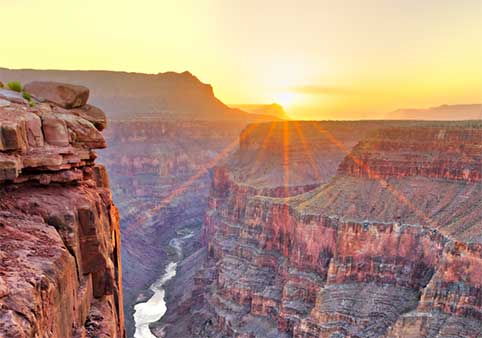
Unlike many South Rim overlooks that focus primarily westward, Desert View opens expansive views toward the eastern Grand Canyon, the Painted Desert and long stretches of the Colorado River winding through Marble Canyon.
Higher observation levels reveal perspectives unavailable anywhere else on the South Rim, making the climb well worth the effort for photographers and first-time visitors alike.
Because the surrounding terrain is more open than much of the central South Rim, visitors often enjoy exceptionally long sightlines extending far beyond the canyon itself.
Climbing the Watchtower, Visitor Tips and Nearby Attractions
Can You Climb Desert View Watchtower?
Yes. One of the things that makes Desert View Watchtower unique is that visitors can explore the building itself rather than simply viewing it from the outside. A series of interior stairways leads through multiple observation levels, each offering a slightly different perspective of the surrounding landscape.
As you climb, take time to appreciate the craftsmanship that went into every detail. The hand-laid stone walls, heavy timber beams and carefully framed windows were all intentionally designed to create the feeling of discovering an ancient structure overlooking the canyon.
The observation windows become progressively larger as you ascend, revealing increasingly expansive views of the Grand Canyon, the Colorado River and the Painted Desert.
Note: Access to the upper floors may occasionally be limited because of preservation work, staffing or other operational needs. Check current conditions before your visit if climbing the tower is a priority.
Desert View Drive
The Watchtower sits at the eastern end of the South Rim's spectacular Desert View Drive, a 23-mile scenic route connecting Grand Canyon Village with the East Entrance.
Many visitors make the mistake of driving directly to Desert View without stopping along the way. Instead, allow several hours to explore overlooks including:
- Grandview Point
- Moran Point
- Lipan Point
- Navajo Point
- Desert View Watchtower
Together, these viewpoints showcase a very different side of the Grand Canyon than Hermit Road, with broader eastern vistas, excellent Colorado River views and fewer crowds.
Explore the Complete Desert View Drive Guide »
Entering Through the East Entrance
If you're arriving from Page, Cameron, Monument Valley or eastern Arizona, Desert View Watchtower is often your first stop inside Grand Canyon National Park.
This makes it an ideal introduction to the canyon. Rather than rushing toward Grand Canyon Village, consider spending time exploring the tower before continuing west along Desert View Drive.
Morning visitors are frequently rewarded with lighter crowds and beautiful sunlight illuminating the eastern canyon.
Photography Tips
Desert View Watchtower offers outstanding photography opportunities both inside and outside the building.
- Photograph the Watchtower itself from several angles before entering.
- Use a wide-angle lens to capture both the tower and canyon.
- Look for Colorado River views from nearby overlooks.
- Morning light beautifully illuminates the eastern canyon.
- Late afternoon adds warm tones to the stone architecture.
- Please avoid using flash around artwork when requested by park staff.
Accessibility
The area surrounding Desert View Watchtower includes paved sidewalks, overlooks, parking, restrooms and visitor services that are accessible to many visitors.
Because the historic Watchtower was built in 1932, upper observation levels are accessible only by stairs. Visitors who cannot climb the tower can still enjoy exceptional canyon views from the surrounding overlooks.
Weather and Safety
Desert View sits at an elevation of approximately 7,400 feet, where weather can change rapidly throughout the year.
- Carry drinking water.
- Wear layers, even during summer.
- Expect strong winds around the rim.
- Watch for icy walkways during winter.
- Remain behind railings near canyon edges.
Afternoon thunderstorms are common during the summer monsoon season. If lightning develops nearby, move indoors or return to your vehicle until the storm passes.
Nearby Attractions
Navajo Point
Only a short walk away, Navajo Point is the South Rim's highest developed overlook and offers excellent Colorado River views along with another perspective of the Watchtower.
Lipan Point
One of the park's best geology overlooks, Lipan Point provides panoramic views of the Colorado River, Unkar Delta and the eastern canyon.
Moran Point
A favorite among geology enthusiasts, Moran Point showcases colorful rock layers representing hundreds of millions of years of Earth's history.
East Entrance
Visitors entering from Cameron, Page or Monument Valley pass through the East Entrance shortly before reaching Desert View.
Desert View Watchtower FAQs
Is Desert View Watchtower worth visiting?
Absolutely. It combines spectacular canyon views, historic architecture, Native American artwork and one of the most recognizable landmarks in Grand Canyon National Park.
Can you climb Desert View Watchtower?
Yes. Visitors can typically climb several interior levels of the Watchtower, although temporary closures or restricted access may occasionally occur.
Who designed Desert View Watchtower?
The Watchtower was designed by renowned architect Mary Colter and completed in 1932 as part of her vision to celebrate the architecture and cultures of the American Southwest.
How tall is Desert View Watchtower?
The historic stone tower stands approximately 70 feet tall above the South Rim.
Is Desert View Watchtower accessible?
The surrounding overlooks and visitor facilities are accessible to many visitors, but the upper observation levels inside the historic tower are reached only by stairs.
How much time should I spend at Desert View Watchtower?
Plan on 45 to 90 minutes to explore the tower, enjoy the surrounding viewpoints and browse nearby visitor services.
Can you see the Colorado River from Desert View?
Yes. Desert View offers some of the South Rim's best eastern views of the Colorado River as it winds through Marble Canyon.
Is Desert View Watchtower included with park admission?
Yes. No additional ticket is required beyond the Grand Canyon National Park entrance fee.
Explore More Grand Canyon Viewpoints
- Best Grand Canyon Viewpoints
- Navajo Point Visitor Guide
- Lipan Point Visitor Guide
- Moran Point Visitor Guide
- Grandview Point Visitor Guide
- Mather Point Visitor Guide
- Yavapai Point Visitor Guide