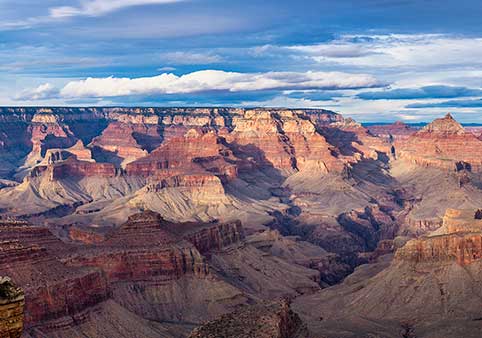
Few places along the South Rim make visitors appreciate the Grand Canyon's immense depth quite like The Abyss. Unlike overlooks that emphasize broad panoramas or distant horizons, this viewpoint draws your attention almost straight down into one of the canyon's most dramatic vertical drops.
Located along Hermit Road between Mohave Point and Pima Point, The Abyss overlooks Monument Creek and is one of the South Rim's most dramatic vertical drops. Standing here, the canyon feels less like a wide landscape and more like an enormous chasm carved deep into the Colorado Plateau.
Although it isn't as famous as Mather Point or Hopi Point, The Abyss is one of Hermit Road's most memorable stops. Visitors looking for unique photography, impressive geology or a quieter experience often consider it one of the highlights of the scenic route.
Why Visit The Abyss?
The Abyss showcases one of the South Rim's most dramatic vertical drops. Instead of looking across the canyon, you'll look deep into Monument Creek and appreciate the enormous depth that makes Grand Canyon National Park unlike anywhere else.
Many visitors combine The Abyss with Mohave Point, Pima Point and Hermits Rest for one of the best half-day sightseeing itineraries on the South Rim.
Watch Your Footing
Strong winds, uneven terrain and exposed cliff edges require extra caution. Stay behind barriers and supervise children carefully.
Like the rest of Hermit Road, private vehicles are generally prohibited from March through November. Plan to use the free Hermits Rest Route shuttle.
| The Abyss at a Glance | Details |
|---|---|
| Location | Hermit Road, South Rim |
| Best For | Vertical canyon views, geology, photography |
| Access | Hermits Rest Route shuttle, walking or bicycle |
| Restrooms | No |
| Drinking Water | No |
| Typical Visit | 20–45 minutes |
| Photography | Excellent |
| Crowds | Light to Moderate |
| Best Time | Morning or late afternoon |
What Makes The Abyss Unique?
A Different Perspective of the Grand Canyon
Most South Rim overlooks encourage visitors to scan across the canyon toward distant buttes and temples. At The Abyss, your eyes naturally move downward.
The overlook sits near the edge of a dramatic cliff where Monument Creek has carved a deep drainage into the canyon below. The nearly vertical walls immediately beneath the rim create one of the strongest visual impressions of depth found anywhere along Hermit Road.
For many first-time visitors, The Abyss provides a better understanding of how steep the Grand Canyon truly is than overlooks that emphasize the broader landscape.
Monument Creek
Far below the overlook lies Monument Creek, one of the Grand Canyon's major side canyons. The drainage begins on the South Rim before descending thousands of feet toward the Colorado River.
Backcountry hikers encounter Monument Creek while traveling one of the park's more challenging overnight routes, but from The Abyss you can appreciate the drainage's impressive scale without leaving the rim.
Changing light throughout the day highlights the creek's twisting course and the steep cliffs surrounding it.
Geology on Display
The Abyss offers an excellent opportunity to observe the Grand Canyon's layered geology. From the rim, visitors can see lighter limestone cliffs resting atop darker sandstone and shale formations before the landscape eventually transitions into the ancient metamorphic rocks deep within the inner canyon.
Millions of years of erosion are visible in a single glance, making this overlook a favorite for visitors interested in the canyon's geologic history.
Why It's Called "The Abyss"
The name comes from the overwhelming sensation of looking into an exceptionally deep section of the canyon. Early visitors described the view as staring into a seemingly bottomless void, and the name has remained ever since.
Although the canyon is obviously not bottomless, standing near the overlook makes it easy to understand why early explorers chose such a dramatic name.
Is The Abyss Worth Visiting?
Absolutely. While it may not offer the South Rim's broadest panorama, it provides one of its most distinctive viewpoints.
- One of Hermit Road's most dramatic overlooks
- Excellent geology
- Unique vertical perspective
- Generally fewer crowds
- Outstanding photography opportunities
The Abyss vs. Pima Point
| The Abyss | Pima Point |
|---|---|
| Vertical canyon views | Colorado River views |
| Monument Creek drainage | Granite Gorge panorama |
| Excellent geology | Excellent sunset |
| Best for depth | Best for river scenery |
| Short visit | Longer photography stop |
If you can only visit one, choose Pima Point for Colorado River views. Choose The Abyss if you want one of the South Rim's most dramatic demonstrations of the canyon's incredible depth.
Compare The Abyss and Pima Point »
Photography, Sunset and Visiting The Abyss
Photography Tips
The Abyss rewards photographers who enjoy dramatic composition. Rather than photographing a distant skyline, consider using foreground rock, trees or the overlook itself to emphasize the canyon's vertical drop.
- Morning light creates strong texture on the canyon walls.
- Late afternoon softens shadows within Monument Creek.
- Wide-angle lenses emphasize depth.
- Telephoto lenses isolate geologic formations.
- Never cross barriers for a photograph.
Is The Abyss Good for Sunset?
While Hopi Point and Pima Point are generally better known for sunset, The Abyss can produce beautiful evening light on Monument Creek and the canyon walls. Visitors looking for fewer crowds often prefer this overlook during the final hours of the day.
Wildlife
Look for ravens riding thermal currents, California condors soaring overhead and mule deer occasionally feeding near the shuttle stop. As always, observe wildlife from a safe distance and never feed animals.
How Long Should You Stay?
Most visitors spend between 20 and 45 minutes at The Abyss. Those interested in photography or geology may choose to stay longer before continuing west toward Pima Point and Hermits Rest.
Getting There, Visitor Tips and Nearby Stops
How to Get to The Abyss
The Abyss is located along Hermit Road on the South Rim of Grand Canyon National Park. During most of the year, private vehicles are not permitted beyond the Hermit Road gate, making the free Hermits Rest Route (Red Route) shuttle the easiest way to visit.
The shuttle stops directly at The Abyss before continuing west toward Pima Point and Hermits Rest. Visitors can also reach the overlook by walking or bicycling the scenic road, making it easy to combine several viewpoints into a single outing.
Walking and Biking Hermit Road
Many visitors enjoy riding the shuttle west before walking portions of Hermit Road back toward Grand Canyon Village. The Abyss sits between Mohave Point and Pima Point, making it an excellent stop on a leisurely scenic walk.
Bicycles are permitted on Hermit Road, and bike rentals are available in Grand Canyon Village during the warmer months.
Accessibility
The Hermits Rest Route shuttle buses are wheelchair accessible, and paved walkways lead from the shuttle stop toward the viewing area. While much of the overlook is accessible, visitors should expect uneven natural surfaces near the canyon rim.
Snow, ice and severe weather may temporarily affect accessibility during winter months.
Weather and Safety
The Abyss earns its name honestly. The overlook sits beside one of the South Rim's most dramatic drops, and strong winds are common throughout the year.
- Remain behind railings and safety barriers.
- Keep children within arm's reach.
- Secure hats, phones and loose items during windy conditions.
- Carry water even during cooler months.
- Avoid exposed areas during thunderstorms.
The canyon's weather can change quickly. Summer afternoons often bring lightning, while winter storms may leave icy conditions on sidewalks and overlooks.
Pets
Pets are not permitted on Grand Canyon shuttle buses. Visitors traveling with dogs may walk sections of Hermit Road where pets are allowed on leash, but reaching The Abyss during the shuttle season requires planning because private vehicles are generally prohibited.
Visiting with Children
The Abyss is unforgettable for families, but it is also one of the South Rim's most dramatic overlooks. Children should always remain close to adults near the canyon rim, particularly during windy weather.
Many families pair a stop at The Abyss with nearby Hermits Rest, where children can enjoy a snack break before returning to Grand Canyon Village.
Nearby Attractions
Mohave Point
Just east of The Abyss, Mohave Point offers outstanding views of the Colorado River and several famous rapids. Together, the two overlooks showcase very different perspectives of the canyon.
Pima Point
Continue west to enjoy one of the South Rim's longest views of the Colorado River winding through Granite Gorge.
Hermits Rest
Only a few minutes farther west, Hermits Rest features historic architecture designed by Mary Colter, seasonal refreshments, restrooms and additional canyon viewpoints.
Hopi Point
One of the park's most famous overlooks, Hopi Point provides sweeping panoramic views and is widely considered one of the South Rim's premier sunset destinations.
The Abyss FAQs
What is The Abyss at Grand Canyon?
The Abyss is a scenic overlook along Hermit Road known for its dramatic vertical views into Monument Creek nearly 3,000 feet below the South Rim.
Is The Abyss worth visiting?
Yes. It offers one of the South Rim's most distinctive viewpoints and is especially popular with photographers, geology enthusiasts and visitors looking for fewer crowds.
Can you drive to The Abyss?
Private vehicles are generally prohibited on Hermit Road from March through November. During that time, visitors reach the overlook using the free Hermits Rest shuttle, by bicycle or on foot.
Is The Abyss good for sunset?
Yes. Although Hopi Point and Pima Point are more famous sunset locations, The Abyss offers beautiful evening light with fewer visitors.
How deep is The Abyss?
The overlook peers approximately 3,000 feet down into Monument Creek, creating one of the South Rim's strongest impressions of vertical relief.
How long should I spend at The Abyss?
Most visitors spend between 20 and 45 minutes enjoying the scenery before continuing toward Pima Point or Hermits Rest.
Are there restrooms at The Abyss?
No. The nearest public restrooms are available at Hermits Rest.
Is The Abyss accessible?
Yes. The shuttle stop and primary overlook are accessible to many visitors, although weather conditions may affect access.
Explore More Grand Canyon Viewpoints
- Best Grand Canyon Viewpoints
- Mohave Point Visitor Guide
- Pima Point Visitor Guide
- Hopi Point Visitor Guide
- Yavapai Point Visitor Guide
- Mather Point Visitor Guide
- Desert View Watchtower Guide