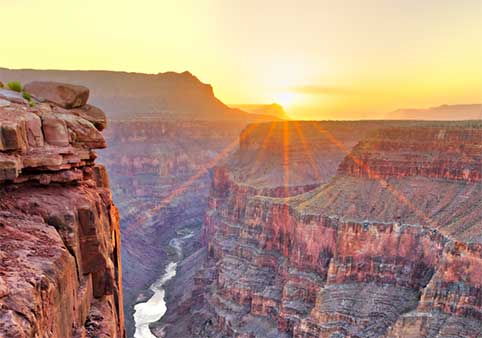
Yaki Point is a scenic South Rim overlook known for broad eastern views, quieter surroundings and direct access by the Grand Canyon shuttle system. It is especially popular at sunrise, when early light reaches the canyon’s cliffs and formations to the east.
The viewpoint is also closely associated with South Kaibab Trailhead, but the two stops serve different purposes. Yaki Point is primarily a scenic overlook. South Kaibab Trailhead is the starting point for one of Grand Canyon’s steepest and most exposed corridor trails.
Yaki Point is the only developed viewpoint along Desert View Drive that is closed to ordinary private vehicles throughout the year. Most visitors park at the Grand Canyon Visitor Center and ride the eastbound Kaibab Rim Route shuttle.
Do Not Drive Down Yaki Point Road
Yaki Point Road and the South Kaibab Trailhead parking area are closed to ordinary private vehicles year-round.
Park at the Grand Canyon Visitor Center and board the eastbound Kaibab Rim Route shuttle. Do not park along Desert View Drive, beside the road gate or at the nearby picnic area and attempt to bypass the restriction.
Best Yaki Point Sunrise Plan
Park at the Grand Canyon Visitor Center and board an early eastbound Orange Route bus. Arrive at least 30 minutes before sunrise so you have time to reach the viewing area safely.
Shuttle operating hours change seasonally. Confirm the first departure before planning a sunrise visit, particularly outside summer.
| Yaki Point at a Glance | What to Know |
|---|---|
| Location | South Rim east of the Grand Canyon Visitor Center |
| Best for | Sunrise, eastern canyon views and a quieter shuttle-accessed overlook |
| Primary access | Eastbound Kaibab Rim Route shuttle |
| Private vehicle access | Closed to ordinary private vehicles year-round |
| Parking | No public parking at the viewpoint; park at the Visitor Center |
| South Kaibab Trailhead | A separate shuttle stop west of Yaki Point |
| Restrooms | Vault toilets near the viewpoint and trailhead area |
| Drinking water | Not available at Yaki Point or South Kaibab Trailhead |
| Accessibility | Accessible shuttle service and developed viewpoint access |
| Typical visit | 30 to 60 minutes; longer for sunrise or sunset |
What to See at Yaki Point
The View from Yaki Point
Yaki Point projects from the South Rim east of the main Visitor Center area. The overlook opens toward the eastern canyon, where long ridges, temples and side canyons descend toward the Colorado River corridor.
Desert View Watchtower can be seen in the distance to the east when visibility is clear. The view helps visitors understand how far Desert View Drive continues beyond the developed Visitor Center area.
The South Kaibab Trail can also be seen dropping from the rim and crossing exposed ridges below. Cedar Ridge and portions of the trail corridor may be visible depending on light and atmospheric conditions.
Because ordinary private vehicles are prohibited, Yaki Point generally has less traffic noise than roadside overlooks with large parking lots. Shuttle arrivals still create waves of visitors, especially near sunrise and sunset.
Why Yaki Point Feels Different
Most South Rim viewpoints are organized around parking areas. Yaki Point is organized around shuttle access, walking and bicycling.
The lack of private vehicles creates a more pedestrian-oriented experience. Visitors step off the bus near the rim rather than navigating a busy parking lot or roadside pullout.
Yaki Point also provides a different canyon orientation from nearby Mather Point. Its eastern exposure makes it particularly useful for sunrise and for viewing formations toward Desert View.
Can You See the Colorado River?
Portions of the Colorado River corridor and inner canyon can be seen from the Yaki Point area, although the river is not the overlook’s dominant feature.
The most recognizable nearby line through the landscape is often the South Kaibab Trail as it descends toward Cedar Ridge and Skeleton Point.
Visitors prioritizing expansive river views should also consider Mohave Point, Navajo Point, Lipan Point when open, and Desert View.
Can You See Desert View Watchtower?
Yes. Desert View Watchtower can be seen far to the east under clear conditions.
A telephoto lens or binoculars make it easier to locate the structure along the rim. The Watchtower appears much smaller than visitors may expect because it is many miles away.
Seeing it from Yaki Point creates a useful visual connection between the central South Rim and the eastern end of Desert View Drive.
Is Yaki Point Worth Visiting?
Yes. Yaki Point is worth visiting for sunrise, broad eastern views and the quieter environment created by year-round private-vehicle restrictions.
It is particularly useful for:
- Visitors seeking a strong South Rim sunrise viewpoint
- Travelers already using the free shuttle system
- Hikers traveling to or from South Kaibab Trailhead
- Visitors who want less vehicle traffic near the rim
- Photographers interested in the eastern canyon
It is less convenient for travelers who have only a few minutes or who do not want to wait for transportation. Mather Point and Grandview Point are easier quick stops because parking is available nearby.
Yaki Point vs. Mather Point
| Yaki Point | Mather Point |
|---|---|
| Reached mainly by shuttle | Reached from large Visitor Center parking lots |
| Known for sunrise and eastern views | Known as a convenient first canyon view |
| No ordinary private vehicles | Busy developed visitor area |
| Near South Kaibab Trailhead | Near the Visitor Center and Rim Trail |
| Fewer visitor services | Food, water, information and restrooms nearby |
| Requires transportation planning | Easier for a brief visit |
Choose Mather Point for convenience and a first Grand Canyon view. Choose Yaki Point for sunrise, quieter surroundings and a closer visual connection with the South Kaibab Trail.
Plan your visit to Mather Point »
Yaki Point vs. Grandview Point
| Yaki Point | Grandview Point |
|---|---|
| Shuttle, bicycle or pedestrian access | Private-vehicle access from Desert View Drive |
| Close to the South Kaibab Trail | Close to the historic Grandview Trail |
| Excellent sunrise location | Strong sunrise and sunset location |
| Quieter without ordinary traffic | More convenient for scenic driving |
| Eastern view toward Desert View | Wider central and eastern panorama |
Yaki Point is better for visitors using the shuttle or hiking South Kaibab Trail. Grandview Point is better for travelers building a private-vehicle itinerary along Desert View Drive.
Compare Yaki Point with Grandview Point »
Sunrise, Sunset and South Kaibab Trail
Sunrise at Yaki Point
Yaki Point is one of the South Rim’s strongest sunrise viewpoints. Its eastern exposure provides a clear view toward the brightening horizon and the formations along the eastern canyon.
Early light may strike the upper cliffs before reaching the deeper portions of the canyon. Clouds can produce additional color, while clear mornings often create sharper layers of light and shadow.
Arrive at least 30 minutes before sunrise. This allows time to leave the shuttle, locate a safe viewing position and adjust to low-light conditions.
The Kaibab Rim Route begins early enough for many sunrise visits, but the first departure changes seasonally. Check the current schedule rather than assuming that a summer timetable applies throughout the year.
How to Reach Yaki Point Before Sunrise
Park in one of the four lots surrounding the Grand Canyon Visitor Center and walk to the shuttle terminal.
Use the eastbound Kaibab Rim Route stop. The eastbound bus travels toward:
- South Kaibab Trailhead
- Yaki Point
- Pipe Creek Vista
- Grand Canyon Visitor Center
Route details can change, so confirm the map and destination signs before boarding.
During the summer 2026 schedule, the first Orange Route bus leaves at 5 a.m. The first bus may leave later during other seasons.
Check the current Kaibab Rim Route schedule »
Sunset at Yaki Point
Yaki Point is also a popular sunset location. The view is oriented more strongly toward the east, but evening light can illuminate formations across the canyon before the sun drops behind the western rim.
Hopi Point provides a broader west-facing sunset panorama, while Yaki Point offers simpler access from the Visitor Center and generally fewer transportation complications after dark.
The Orange Route currently operates until approximately one hour after sunset. Board a return shuttle promptly and confirm the location of the final pickup before the evening becomes dark.
Bring a headlamp and warm clothing. Temperatures can drop quickly once direct sunlight leaves the rim.
Compare Yaki Point and Hopi Point for sunset »
Photography Tips
- Arrive before sunrise to photograph the changing light rather than only the moment the sun appears.
- Look east toward Desert View Watchtower and the widening canyon.
- Use a telephoto lens to isolate distant formations and sections of South Kaibab Trail.
- Include foreground trees or rock to give the canyon a sense of scale.
- Keep tripods clear of shuttle loading areas and accessible paths.
- Carry a headlamp for packing equipment before sunrise or after sunset.
- Never cross barriers or step backward toward an exposed edge while framing an image.
Yaki Point and South Kaibab Trailhead
Yaki Point and South Kaibab Trailhead are served by the same shuttle route, but they are separate stops.
South Kaibab Trailhead is west of Yaki Point and is the correct stop for hikers beginning South Kaibab Trail. Visitors seeking only the overlook should remain on the shuttle until Yaki Point.
Do not begin hiking from the trailhead under the assumption that Yaki Point is located along South Kaibab Trail. The overlook is above the rim and reached by road, while the trail descends rapidly into the canyon.
South Kaibab Trail Access
Private vehicles are not allowed at South Kaibab Trailhead. Hikers ordinarily reach it using the Kaibab Rim Route, the early-morning Hikers’ Express or authorized taxi service.
The Hikers’ Express begins near Bright Angel Lodge and stops at the Backcountry Information Center before traveling to South Kaibab Trailhead. Departure times vary by month.
Hikers using the regular Orange Route should park at the Visitor Center and board the eastbound shuttle.
Read the complete South Kaibab Trail guide »
Do Not Confuse the Viewpoint with Ooh Aah Point
Ooh Aah Point is not located at Yaki Point. It is an overlook approximately 0.9 mile down South Kaibab Trail.
Reaching Ooh Aah Point requires descending below the rim and climbing back to the trailhead. The round trip is approximately 1.8 miles and includes a substantial elevation change.
The route is exposed, has little shade and provides no drinking water. It should be treated as a real canyon hike rather than a paved extension of the viewpoint.
Visitors who only want a scenic overlook should stay aboard the shuttle until Yaki Point and remain above the rim.
Can You Walk Between Yaki Point and South Kaibab Trailhead?
Visitors may walk or bicycle along Yaki Point Road, but there is no reason to walk the roadway merely because private vehicles are prohibited.
The shuttle provides direct service to both stops. Walking should be based on interest and fitness rather than on a mistaken belief that no transportation is available.
Roadway users must remain alert for shuttle buses, authorized vehicles, cyclists and other pedestrians.
Can You Hike from Yaki Point into the Canyon?
Yaki Point itself is not the beginning of a maintained inner-canyon trail. The nearby South Kaibab Trail begins at its own designated trailhead.
Use the South Kaibab Trailhead shuttle stop when beginning a hike. Do not attempt to create an informal route down from the viewpoint.
Off-trail travel near the rim can involve unstable rock, cliffs, protected vegetation and archaeological resources.
South Kaibab Trail Safety
South Kaibab Trail is steep, exposed and almost entirely without shade. There is no drinking water at the trailhead or anywhere along the trail.
Common day-hike destinations include:
- Ooh Aah Point at approximately 0.9 mile one way
- Cedar Ridge at approximately 1.5 miles one way
- Skeleton Point at approximately 3 miles one way
The climb back to the rim is much harder than the descent. Summer heat, winter ice, altitude and inadequate water can turn a short-looking hike into an emergency.
The National Park Service strongly discourages hiking from the rim to the Colorado River and back in one day.
Shuttle Access, Accessibility and Visit Planning
How to Reach Yaki Point
The standard way to reach Yaki Point is the free Kaibab Rim Route, identified by orange route signs.
Park at the Grand Canyon Visitor Center and use the eastbound shuttle stop. Do not board the westbound Orange Route bus toward Mather Point and Yavapai Geology Museum.
The complete Orange Route loop takes approximately 50 minutes without getting off. Actual travel time can be longer when buses are crowded or visitors must wait for the next departure.
2026 Summer Shuttle Schedule
For the summer schedule from May 23 through September 11, 2026, the Kaibab Rim Route operates from 5 a.m. until one hour after sunset.
Current summer frequency is:
- Every 15 minutes from 5 a.m. to 9 a.m.
- Approximately every 12 minutes from 9 a.m. until one hour after sunset
Spring, fall and winter operating hours differ. Always confirm the current schedule before planning sunrise, sunset or a time-sensitive hike.
Can You Drive to Yaki Point?
No, not in an ordinary private vehicle. Yaki Point Road and the South Kaibab Trailhead parking area are closed to ordinary private traffic from January 1 through December 31.
Authorized park vehicles, shuttle buses, emergency vehicles, commercial operators and qualifying accessibility-permit holders may be allowed under applicable rules.
The restriction is permanent rather than a seasonal closure. Winter access rules for Hermit Road do not apply to Yaki Point Road.
Accessibility Permit Access
Visitors with mobility limitations may obtain a Scenic Drive Accessibility Permit at park entrance stations or National Park Service visitor centers.
The permit may allow a qualifying vehicle to enter certain roads closed to general traffic, including Yaki Point Road. It does not replace a state-issued accessible parking placard where one is required.
Ask a ranger about current access procedures, gate operation and designated parking before driving toward the restricted road.
Shuttle Accessibility
Grand Canyon shuttle buses include ramps and designated wheelchair space.
Wheelchairs larger than 30 inches wide by 48 inches long cannot be accommodated. Many oversized motorized scooters also do not fit.
Visitors should be prepared to load and unload promptly and follow the driver’s directions. During crowded periods, available wheelchair space may already be occupied.
Parking for Yaki Point
There is no ordinary public parking at Yaki Point.
Use the four parking lots surrounding the Grand Canyon Visitor Center. Lot 1 includes pull-through spaces for larger RVs and vehicles towing trailers.
After parking, follow signs to the shuttle terminal and board the eastbound Orange Route.
Do not use the nearby Yaki Point Road picnic area as substitute viewpoint or trailhead parking. Parking there is very limited, and the picnic area does not provide a canyon view.
Restrooms, Food and Water
Vault toilets are available in the Yaki Point and South Kaibab Trailhead area.
There is no food service and no drinking-water station at Yaki Point or South Kaibab Trailhead.
Fill reusable water bottles at the Visitor Center before boarding the shuttle. Hikers must carry all water needed for South Kaibab Trail.
Pets
Pets are not permitted on park shuttle buses. Qualifying service animals are allowed under applicable accessibility rules.
Pets are also not permitted on South Kaibab Trail below the rim.
Because ordinary private vehicles cannot reach Yaki Point, visiting with a pet generally requires walking or bicycling along a route where pets are otherwise permitted. Do not leave animals unattended in a parked vehicle.
Bicycling to Yaki Point
Bicycles may use Yaki Point Road. Cyclists must share the roadway with shuttle buses and authorized vehicles.
Ride in the direction of traffic, obey signs and remain visible. Use lights during low-light hours and expect cold conditions near sunrise.
Electric bicycle use is governed by current National Park Service rules. Check classification and route restrictions before riding.
Visiting with Children
Yaki Point can work well for families because the shuttle provides direct access and no strenuous hike is required.
- Keep children within reach near the rim.
- Do not allow climbing or sitting on barriers.
- Remain clear of the shuttle roadway and loading area.
- Carry water, snacks and warm clothing.
- Do not descend South Kaibab Trail without planning for the climb back.
Weather and Seasonal Conditions
Yaki Point is exposed to sun, wind, rain, snow and thunderstorms.
Summer afternoon lightning can make the rim dangerous. Leave exposed viewpoints when thunder is nearby and follow instructions from shuttle drivers and park staff.
Winter snow and ice may cover paths and viewing areas. Shuttle service can be delayed, modified or suspended during severe weather or unsafe road conditions.
How Long Should You Spend at Yaki Point?
Allow approximately 30 to 60 minutes at the viewpoint.
For sunrise or sunset, allow 90 minutes or longer to account for early arrival, changing light and shuttle transportation.
A complete outing from the Visitor Center may take two hours once shuttle waiting and travel time are included.
Do not include a South Kaibab hike in the same time estimate. Even the round trip to Ooh Aah Point requires additional preparation and time.
Nearby Places to Visit
South Kaibab Trailhead
Use the separate shuttle stop for access to Ooh Aah Point, Cedar Ridge and longer South Kaibab Trail hikes.
Pipe Creek Vista
This accessible Desert View Drive overlook is served by the Orange Route and can also be reached by private vehicle.
Mather Point
One of the South Rim’s most convenient viewpoints is located beside the Grand Canyon Visitor Center.
Yavapai Point
Visit Yavapai Geology Museum and begin exploring the Trail of Time.
Grandview Point
Continue east by private vehicle for a high-elevation panorama and Grand Canyon mining history.
Yaki Point FAQs
Is Yaki Point worth visiting?
Yes. Yaki Point provides broad eastern canyon views, a clear sightline toward Desert View and a quieter environment because ordinary private vehicles are prohibited year-round.
Can you drive to Yaki Point?
No. Yaki Point Road is closed to ordinary private vehicles throughout the year. Most visitors park at the Grand Canyon Visitor Center and take the eastbound Kaibab Rim Route shuttle.
Which shuttle goes to Yaki Point?
The free Kaibab Rim Route, identified by orange signs, provides service between the Grand Canyon Visitor Center, South Kaibab Trailhead, Yaki Point and other nearby stops.
Where should you park for Yaki Point?
Park in one of the four parking lots surrounding the Grand Canyon Visitor Center and board the eastbound Orange Route shuttle.
Is Yaki Point good for sunrise?
Yes. Yaki Point is one of the South Rim’s strongest sunrise viewpoints because it opens toward the eastern canyon. Confirm that the first seasonal shuttle leaves early enough for sunrise.
Is Yaki Point good for sunset?
Yes. Evening light can illuminate the eastern canyon, and the Orange Route currently operates until approximately one hour after sunset. Hopi Point provides a more direct western sunset panorama.
How long does the shuttle to Yaki Point take?
The complete Kaibab Rim Route loop takes approximately 50 minutes without getting off. The ride from the Visitor Center to Yaki Point is shorter, but waiting and crowding can increase total travel time.
Is Yaki Point the same as South Kaibab Trailhead?
No. They are separate shuttle stops. Yaki Point is a developed scenic overlook, while South Kaibab Trailhead is the beginning of the trail descending toward Ooh Aah Point, Cedar Ridge and the inner canyon.
Is Ooh Aah Point at Yaki Point?
No. Ooh Aah Point is approximately 0.9 mile down South Kaibab Trail. Reaching it requires a roughly 1.8-mile round-trip hike with substantial elevation change.
Can you park at South Kaibab Trailhead?
No. The trailhead parking area is closed to private vehicles. Hikers generally use the Orange Route shuttle, the Hikers’ Express or authorized taxi service.
Is drinking water available at Yaki Point?
No. There is no drinking water at Yaki Point or South Kaibab Trailhead. Fill bottles before boarding the shuttle and carry all water needed for a hike.
Are there restrooms at Yaki Point?
Vault toilets are available in the Yaki Point and South Kaibab Trailhead area.
Is Yaki Point accessible?
The shuttle system and developed viewpoint provide accessible options. Visitors with mobility limitations may also qualify for a Scenic Drive Accessibility Permit allowing vehicle access under current park rules.
Are pets allowed at Yaki Point?
Pets are not permitted on park shuttle buses or on South Kaibab Trail below the rim. Qualifying service animals are allowed under applicable regulations.
Can you bicycle to Yaki Point?
Yes. Bicycles may use Yaki Point Road, but cyclists must share the route with shuttle buses and authorized vehicles.
Explore More Grand Canyon Viewpoints
- Best Grand Canyon Viewpoints
- Mather Point Visitor Guide
- Yavapai Point and Geology Museum
- Hopi Point Sunset Guide
- Grandview Point Visitor Guide
- Mohave Point Visitor Guide
- Navajo Point Visitor Guide